

How Speech Sound Errors Can Affect Reading and Writing
Written By: McKenna Crisp, M.S R-SLP
Registered Speech Language Pathologist
Did you know that children who have speech sound difficulties are more likely to have difficulties with their reading and writing than their same-age peers? (Line Walquist-Sørli et al., 2024)
What is a Speech Sound Error?
A speech sound error occurs when a child consistently says a sound incorrectly. For example, they may say "wabbit" instead of "rabbit", or "wing" instead of "ring" because they substitute the /r/ sound with a /w/.
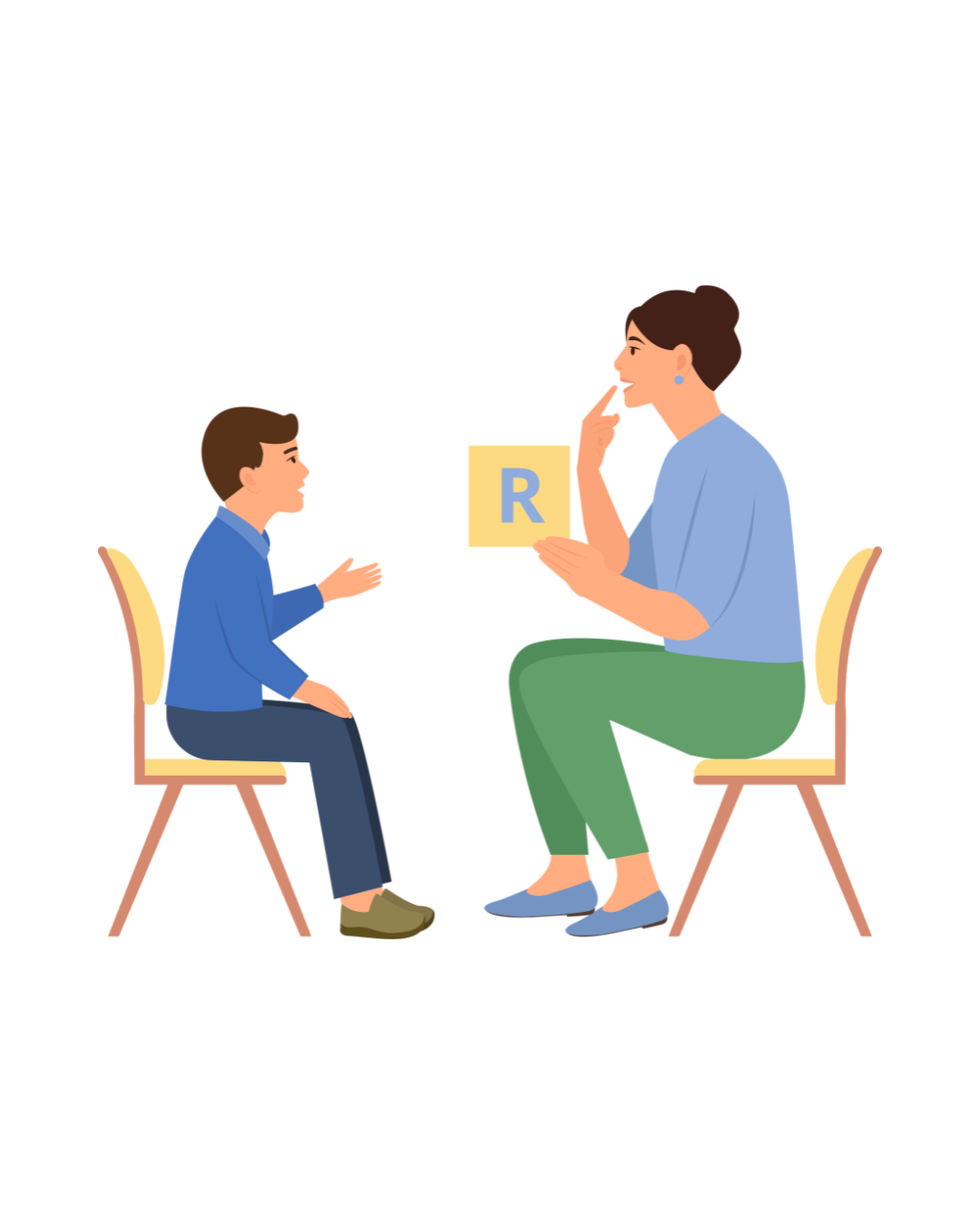
Sometimes, speech sound errors happen because children cannot hear the difference between two similar sounds. For example, they may think the /f/ sound and the /th/ sound are the same.
This is why speech therapy often begins with auditory discrimination, helping children learn to hear the difference between sounds before expecting them to say them correctly. If a child cannot hear that two sounds are different, it becomes much more difficult for them to recognize and correct their own speech errors.
How does this Affect Reading and Writing?
Speech, reading, and writing are closely connected. Children often write words the way they hear them, if they hear or produce sounds incorrectly, those same errors can appear in their spelling.
For example, imagine asking a child to sound out the word "thumb." A child who says /th/ as /f/ may identify the sounds as "f-u-m-b" instead of "th-u-m-b." Since many schools now teach reading and spelling using phonics, connecting letters to the sounds in words, accurately hearing and producing speech sounds is an important foundation for literacy.
When children can clearly hear, produce, and identify speech sounds, they are better prepared to:
Learn letter-sound relationships.
Sound out unfamiliar words while reading.
Spell words more accurately.
Build confidence in both reading and writing.
When Should Speech Sound Errors be Addressed?
While some speech sound errors are a typical part of development, persistent errors can impact early literacy skills if they continue into the school years.
Whenever possible, it is recommended that significant speech sound errors are addressed before a child enters kindergarten. Early intervention gives children the opportunity to build strong speech, reading, and writing skills before literacy demands increase.
If you're unsure whether your child's speech sounds are developing as expected, a Speech-Language Pathologist can assess their speech and determine whether support would be beneficial.
Do you have questions regarding your child’s speech and language development? Please reach out to info@ascendpeds.com, and they would be happy to help!
References:
Line Walquist-Sørli, Ømur Caglar-Ryeng, Bjarte Furnes, Trude Nergård-Nilssen, Enrica Donolato, & Melby-Lervåg, M. (2024). Are Speech Sound Difficulties Risk Factors for Difficulties in Language and Reading Skills? A Systematic Review and Meta-Analysis. Journal of Speech Language and Hearing Research, 68(1), 1–14. https://doi.org/10.1044/2024_jslhr-24-00170